A Controlled Crowd: Proving Waiting-Room Fairness Before the Peak Sale
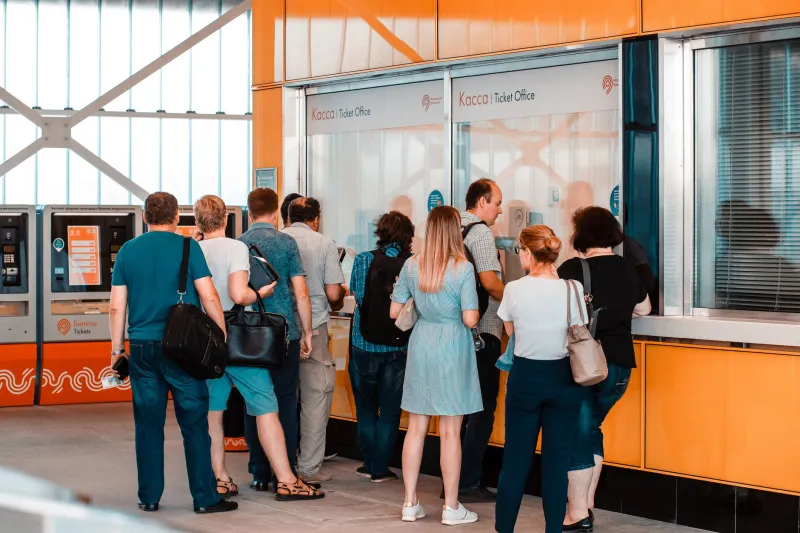
The virtual waiting room has an awkward place in many launch plans. It is often procured late, configured under pressure and treated as a gate in front of the real customer journey. For the customer, however, it is the journey. During a UK peak sale, a ticket on-sale or a limited stock drop, the queue is the first thing they see, the thing they will describe to others and the place where trust is either maintained or lost.
That is why a waiting room should be rehearsed as a controlled system, not switched on as a last-minute safety valve. Fairness, bot resistance, accessibility and fallback messaging are not separate workstreams. They meet in the same few seconds of customer experience, and they need to be tested together.
Define what the queue is for
Before any load test, agree the contract the queue is meant to honour. It should protect origin systems from unmanageable demand, admit customers at a rate the transaction tier can sustain and give waiting customers an honest picture of what is happening. Those aims can pull against each other. A very strict admission rate protects the platform but lengthens the wait. A loose rate moves the crowd forward but pushes failure downstream into basket, payment or stock reservation.
Write the contract down as service levels. Useful measures include admission throughput, queue drain time, token rejection rate, status refresh cadence and fallback response time. Add a customer-facing measure as well: the proportion of waiting sessions that receive a meaningful position or estimate within a stated interval. Without that, the queue may be technically healthy while the customer experience is opaque.
Fairness is an engineering property
Fairness is often discussed as policy, but it is implemented in code. Queue order depends on token issuance, clock synchronisation, shard allocation, retry behaviour and session identity. A customer who refreshes should not lose a legitimate place, and a customer who opens five tabs should not gain five places. Test both.
Build synthetic cohorts with known arrival times and follow them through the admission system. Verify first-in, first-out behaviour within each cohort, and verify any deliberate priority rules separately. Inject clock skew between queue nodes and check whether ordering remains stable. Confirm that queue tokens are signed, scoped and time-limited, and that a stale token cannot be replayed after admission. These are not abstract security checks. They are the mechanics of a queue that customers can believe in.
Bot resistance without collateral damage
High-demand UK launches attract automated purchasing. A waiting room is therefore part of the bot-defence estate, but it must not become a barrier for real customers using assistive technology, older devices, corporate networks or mobile connections. Rehearse the challenge flow with keyboard-only navigation and screen readers. Measure false positives for known-good test accounts, including shared network addresses and accessibility tooling.
Rate limits, device signals and proof-of-work style challenges all have a place, provided there is a supported recovery route. The queue should fail closed for suspicious automation and fail open, with human support, for a customer who cannot complete a challenge. Test that distinction explicitly. A bot defence that locks out a genuine customer during a festive delivery cut-off is a trust incident, not a security win.
Accessibility and fallback messaging under pressure
A waiting room is a status interface. It should announce changes without overwhelming the customer. Use restrained ARIA live updates, readable position information and text explanations that do not rely on colour alone. Meet WCAG 2.2 expectations for focus order, contrast and timeout behaviour. Consider cognitive load: a queue position that jumps wildly or an estimate that resets without explanation is worse than a simple, honest message.
Fallback deserves equal rigour. Prepare a static, CDN-hosted page that can explain the delay, set an expectation and offer a support route if the dynamic queue service is degraded. Test it with throttled connections and older devices. In the UK public sector and regulated contexts, accessibility duties do not disappear because demand is high. The fallback page should be part of the same accessibility review as the primary queue.
Load-test the whole admission path
A queue load test that exercises only the queue service is incomplete. The admission path runs through token validation, edge routing, origin protection, session state and, eventually, the transaction tier. Model realistic arrival curves rather than a single flat peak. Include burst arrivals at the advertised start time, slow clients, abandoned sessions and retries after transient errors.
Measure admission rate, queue drain time, error rate and tail latency together. Then rehearse failure modes: queue provider outage, token service degradation, CDN purge and origin saturation. Run a game day with customer support and incident communications so that the people answering questions can see the same queue state as the customer. A queue that is honest, accessible and resilient is not a cost centre. It is a visible expression of operational confidence, and it deserves to be tested before the crowd arrives.